24 June 2026
5 min readFind where your payday money goes
Getting paid should make rent, bills, food and transport easier to deal with. For a lot of people, it only gives a few days of relief from worry.
The money comes in. Then rent, bills, food, transport, subscriptions and debt payments go out. After that, takeaways, coffees, transport fares and things you buy during the week keep taking more out of the account. Before long, you're waiting for payday again.
It's frustrating because you have income. You pay for what you need. You might even tell yourself you're managing your money. But if the numbers only live in your head, you're guessing.
Guessing isn't managing.
Write it down
The first step isn't a perfect budget. It isn't a full financial plan. It isn't a complicated system with twenty categories.
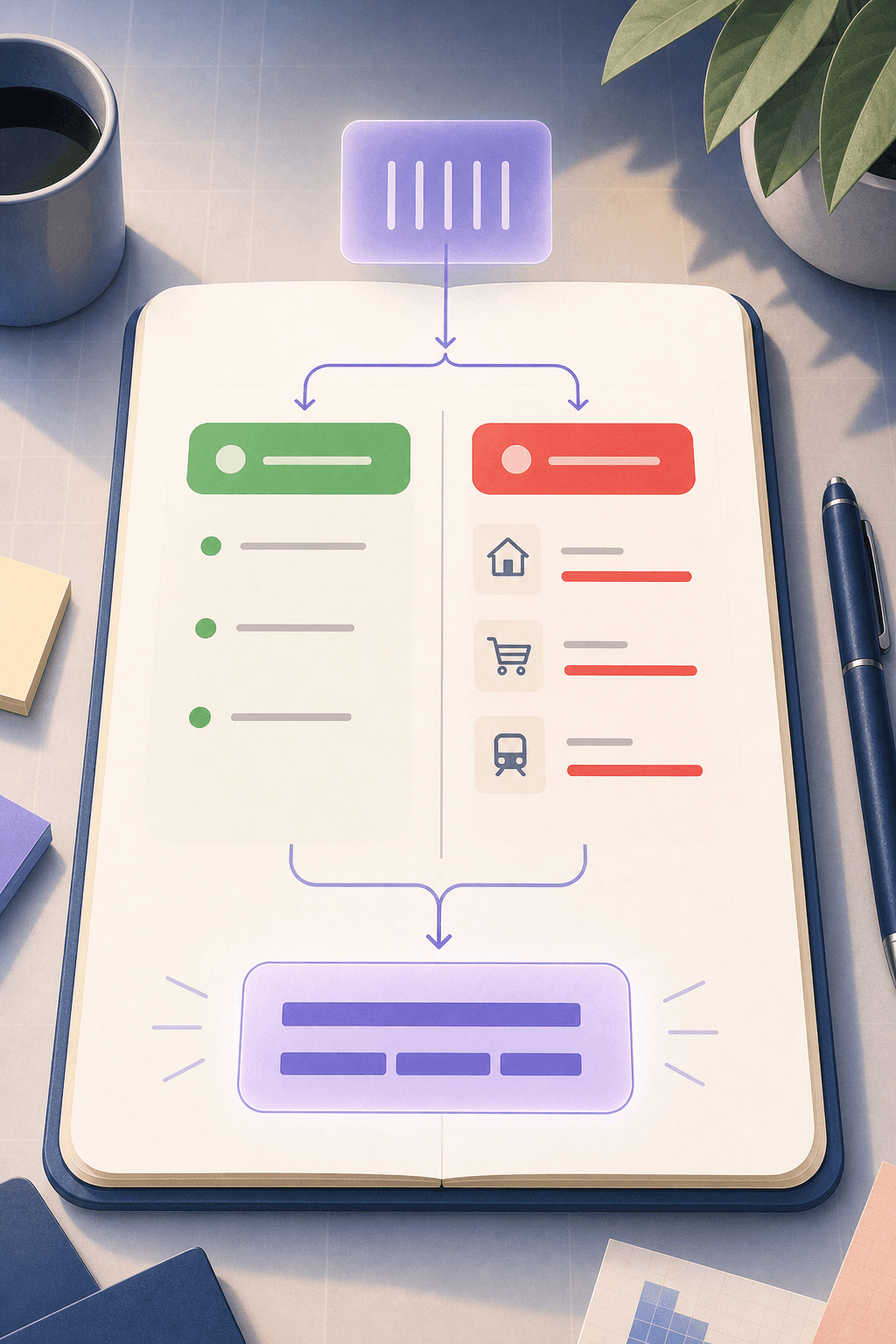
Start with two lists. Earnings and expenses.
For earnings, write down the money you know is coming in. Salary, freelance work, benefits, or anything else that is confirmed. Don't include money you hope might appear later.
For expenses, write down the money you know is going out. Rent, mortgage, phone, utilities, transport, food, subscriptions, debt payments, insurance, school costs, and anything else you pay for.
If you know the exact number, use it. If you don't know the exact number, estimate higher. Give yourself room instead of pretending the cost is lower.
Then take expenses away from earnings and look at what is left.
Now you have the truth. Not the version you have been carrying around in your head.
Be honest about the result
You might not like what you see.
You might find that expenses are higher than earnings. You might find that debt payments and interest are costing more than you admitted to yourself. You might find that food, transport, subscriptions or nights out are taking more money than you thought.
It won't feel good, but it's better than guessing.
This is where a lot of people stop. They look once, feel uncomfortable, then avoid it again. Payday comes, money leaves, stress builds, and nothing changes.
The habit is checking and updating it daily, even when it feels uncomfortable.
Use the money you actually have
Don't build your plan around money you don't have yet.
It's easy to say you will earn more next month, pick up extra work, sell something, or sort it out later. Maybe you will. But until that money is confirmed, it shouldn't be part of the plan.
Start with what is true right now.
If expenses are higher than earnings, you need to reduce expenses until the numbers at least break even. You might need to cancel something, reduce food delivery, lower subscriptions, change a bill date, or spend less in a category that you can control.
It doesn't always mean a huge lifestyle change. Sometimes it does. It depends how big the gap is. But you can't know what needs to change until the numbers are written down.
Start with one simple check
If your money disappears after payday, start with one simple check.
Open your bank account. Look at this month or last month. Write down what came in. Write down what went out. Then look at the difference.
You can start there.
You don't need to understand investing. You don't need to know every financial term. You don't need a perfect system. You need to know your earnings, your expenses, and what is left.
After that, choose one expense you can reduce this week.
Keep it updated
Writing it down once helps. Checking and updating it daily is what builds the habit.
Money changes during the month. A payment clears. A bill arrives. Food costs more than expected. A subscription renews. If you only check once, the numbers go out of date.
A short daily check is enough. Look at what changed, update the earnings or expenses, and see what is left.
You get more control because you're not waiting for the bank balance to surprise you.
Where ClearLedger fits
ClearLedger is built around the same simple habit. Log earnings. Log expenses. See what is left.
It won't manage your money for you. No tool can do that. The change starts when you decide to look at the numbers and keep looking at them.
But a good tool can make that habit easier to keep.
If your money disappears after payday, start with the numbers. Write down what comes in, what goes out, and what is left.
Sign in to ClearLedger and start building the habit.
Was this useful?
Your reaction helps improve future articles.