10 June 2026
5 min readSeparate good debt from bad debt
When I was younger, I didn't really understand what it meant to have a credit card.
I saw the limit and treated it like free money. It felt like a cheat code. I could spend now and think about it later.
It wasn't free money.
If you borrow money and don't pay it back in full, you pay for using it. That cost is interest. If you miss payments, you can also get late fees, more interest, and damage to your credit rating.
I didn't care about any of that at the start. I spent and spent without thinking. Then the card was maxed out, I couldn't pay it off, and the debt stayed with me for years.
Bad debt buys things that lose value
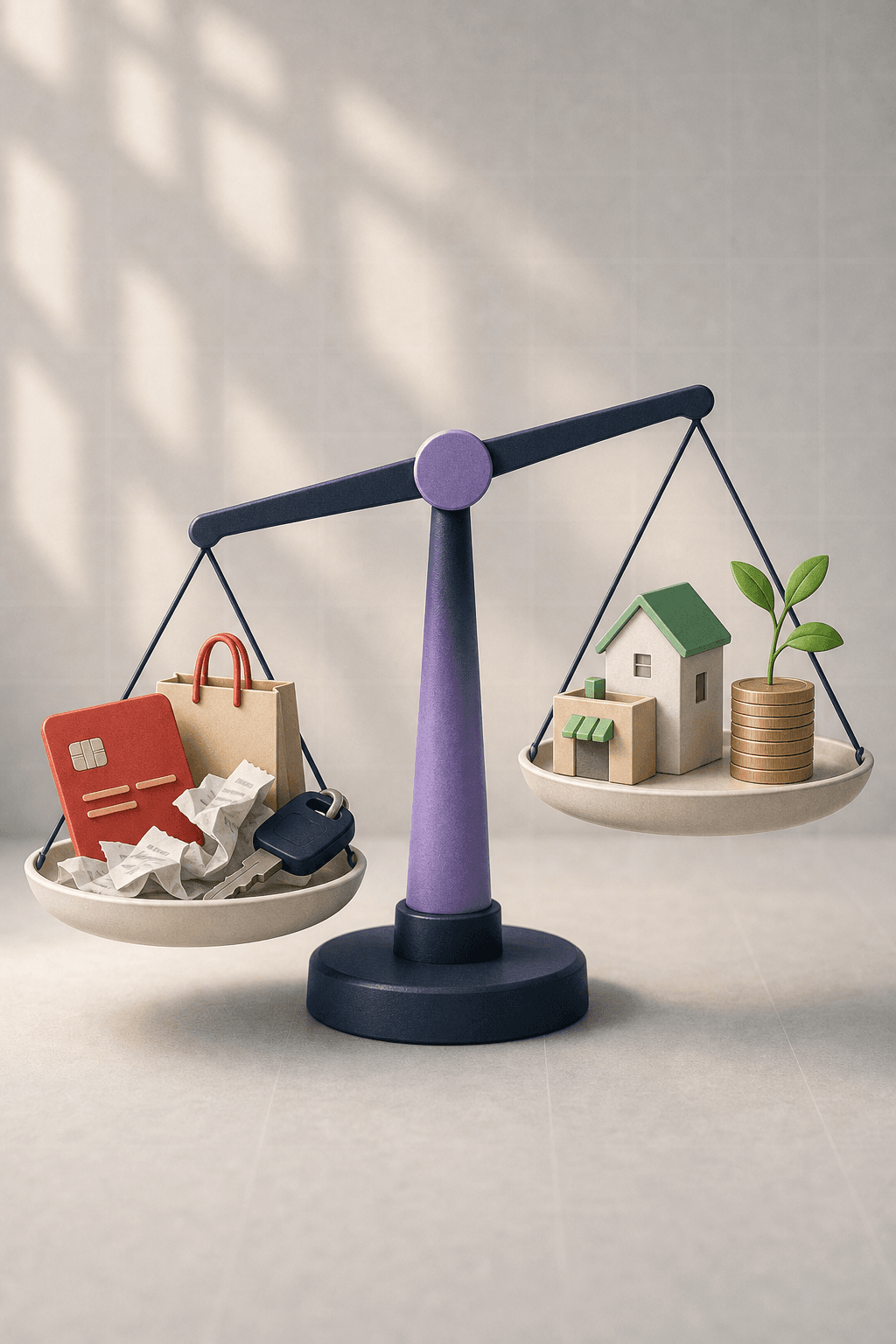
Bad debt, to me, is debt used to buy things that lose value or disappear after you use them.
Clothes. Fancy dinners. Holidays. A new car you cannot pay for. The meal is finished. The clothes get older. The car loses value as soon as you drive it away. But the debt is still there.
That is what happened to me with credit cards. The things I bought were gone, but the balance stayed. Interest was added. Fees were added. The original spending became a much bigger problem than it needed to be.
That is why bad debt is so dangerous. You get the short-term feeling first, then carry the long-term cost after.
Good debt can build something
Good debt, to me, is debt used to buy or build something that has a real chance of growing in value over time.
A mortgage on a property can make sense. Borrowing money for a business can make sense. Education might make sense if it genuinely improves your earning power, but that depends on the person, the cost, and the result.
I would be more careful with borrowing money to invest in shares or anything that can move quickly. It might work, but it can also go against you quickly. Just because something might go up doesn't mean the debt is good.
Good debt still has risk. A property can go down. A business can fail. An investment can fall. Borrowing money does not make something smart. The thing you borrow for needs to make sense, and the repayments need to fit your numbers.
Credit cards aren't always bad
I use a credit card now for most of my spending.
Groceries. Clothes. Food out. Charging the car. I use it because I can earn points and rewards. But the difference now is that I track what I spend and keep money aside to pay the card in full when it is due.
If I can't pay it in full, I shouldn't put it on the card.
Used like that, a credit card can be useful. It can help with rewards and credit history. Used badly, it becomes expensive debt.
Don't trust the monthly payment
A monthly payment can make debt feel manageable when the full debt is not manageable.
That is the trap. You look at the payment and think you can handle it, but you ignore the full balance, the interest rate, and how long it will take to pay off.
If you only look at the monthly payment, you can carry debt for years while interest keeps taking money from you.
Look at the full amount owed. Look at the interest. Look at the payment date. Then decide whether the debt is helping you or costing you.
Write debt into the numbers
Debt needs to be part of your monthly outgoings.
If your current account pays your credit card, add the credit card payment as an expense. If you have a separate credit card balance, track that account too. Know the balance. Know the payment. Know the interest.
Where possible, pay the card in full. If you cannot, do not ignore it. Put the payment into your monthly plan and keep reducing the balance.
The debt does not become easier because you avoid it. It becomes easier when you know exactly what it is costing you.
Saving while paying debt
Debt repayment and saving can happen at the same time, but only if the numbers allow it.
I paid down a large chunk of my debt first. Then I kept saving while I was still paying the rest. Having savings helped because I could use that money to clear the card instead of scraping around each month.
If the interest is high, the debt may need to come first. If you have room, a small savings buffer can stop you going back into debt the next time something happens.
The answer is in the numbers. Not in guessing.
Ask one question before borrowing
Before taking on debt, ask yourself whether it helps you build value or whether you're borrowing to consume.
If the thing won't make money, won't hold value, and you cannot pay it off quickly, be careful. You might just be giving yourself a future payment for something that is already gone.
Property can make sense. A business can make sense. A car loan for a new car usually doesn't make sense to me. Buy the car you can afford. Don't carry debt for something falling in value unless you have a strong reason.
You get better at making these decisions when you build the habit of managing your money. You start to know what you can afford, what is too much, and when you need to stop digging.
Where ClearLedger fits
ClearLedger helps you see how much of your month is going towards debt.
You can log income, outgoings, credit card payments, and what is left. That makes it harder to pretend debt is fine when it is taking too much of the month.
It won't decide for you. It won't make debt disappear. But it gives you the numbers so you can see what is happening and start making better decisions.
If you are in bad debt, start by writing it down. If you are thinking about taking on debt, write down the repayment before you commit.
Sign in to ClearLedger and start building the habit.
Was this useful?
Your reaction helps improve future articles.