3 June 2026
5 min readPlan future costs early
I don't like only looking at the current month.
It helps, but it can still leave you reacting to what is due today instead of seeing what is coming next.
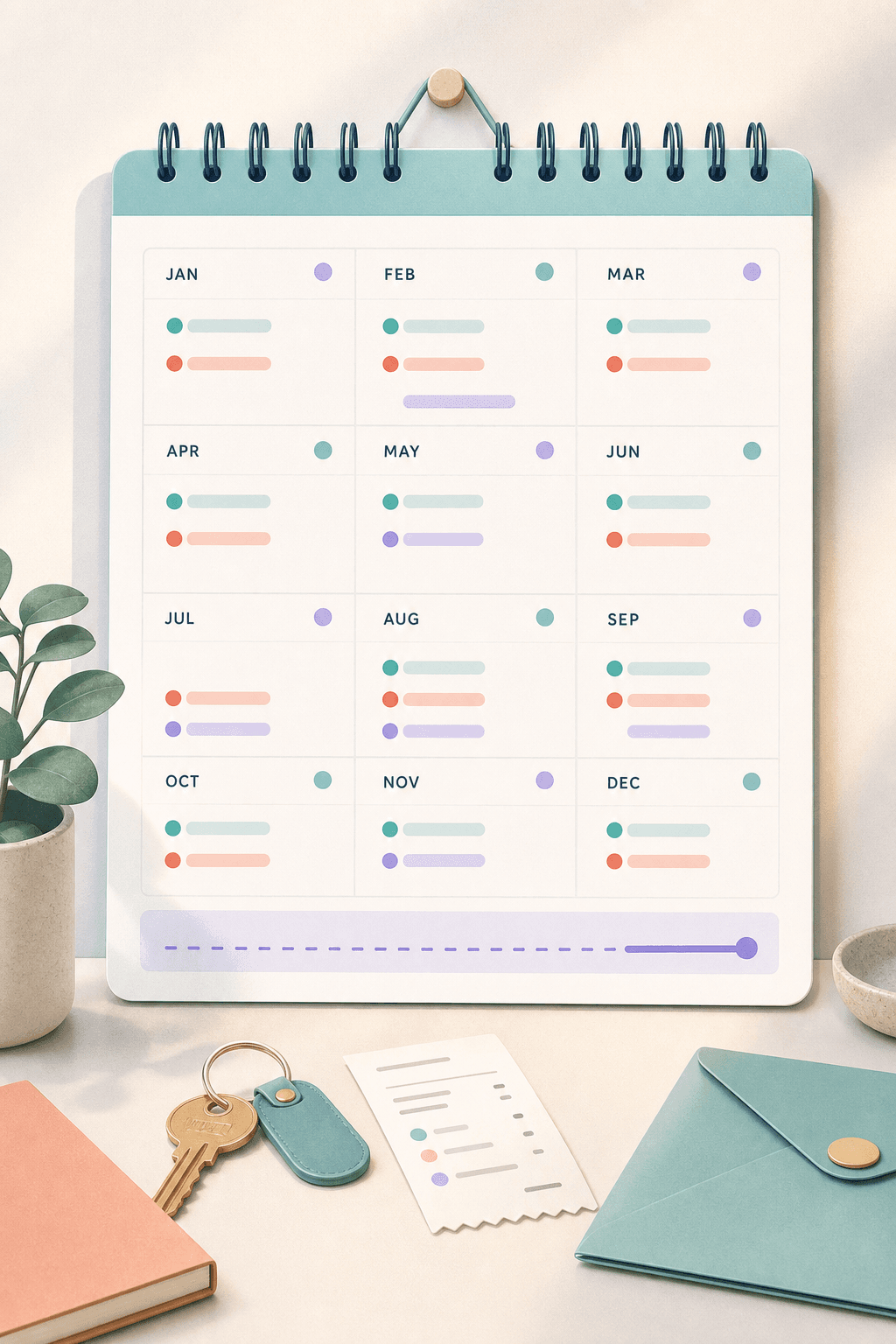
That is why my spreadsheet ended up with 12 months in it. Each month had the same two columns. Earnings and expenses. If I knew something was going out in a future month, I added it there.
Rent. Transport. Groceries. Subscriptions. Bills. Anything recurring went in first.
That meant the next few months weren't sitting in my head. They were written down.
Start with recurring costs
Recurring costs are the easiest costs to plan because they keep coming back.
Add rent, mortgage, food, transport, utilities, phone, subscriptions, debt payments, insurance and anything else you pay for again and again.
Once those are in, you can look ahead and see what each month already needs before you spend anything extra.
If you're paying off debt, this matters even more. The goal isn't to add more future spending. The goal is to keep expenses low enough that more money can go towards the debt and the interest attached to it.
Start with what is already committed. Then work from there.
Estimate higher
If I don't know the exact cost, I estimate higher.
If I have paid for something before, I use the old cost as the starting point and add 10 to 20 percent on top. If I have never paid for it before, I do some research, look at prices, then add extra.
I would rather overestimate and have money left over than underestimate and start scraping around later.
If the cost comes in lower, good. The extra money is still there. It can stay in the buffer, go into savings, go towards debt, or sit ready for the next thing.
Writing down a cheaper number does not make the bill cheaper. It only makes the plan weaker.
Check before big purchases
I don't plan every birthday, Christmas gift or one-off purchase months ahead.
But if something expensive is coming up, I put it into the spreadsheet before I buy it.
Then I can see what happens before the money leaves. Does it still fit? Does it need to wait? Do I need to move money from somewhere else?
It doesn't mean never buying anything. It means checking the effect before pretending the purchase is fine.
Keep a cash reserve
Some costs will still arrive without warning.
A vet bill is a good example. I didn't want to use cash reserves for it, but that is what the reserve was there for. The bill arrived, the money was available, and I could pay it without panic.
That is the point of a reserve. It is not there to make you feel rich. It is there so one unexpected cost does not wreck the month.
Without that reserve, the same bill would have felt completely different. More stress. More scrambling. More chance of putting it on a credit card.
You cannot plan every exact cost. You can plan for the fact that something will happen.
Cut costs that keep repeating
Future planning also shows what keeps taking money every month.
Recently, I looked through subscriptions and found video, music and app payments that were costing more than $1,000 a year. Each one looked small on its own. Together, they were worth cutting.
That is why recurring costs matter. A small monthly payment can become a large yearly number.
If money is tight, this is one of the first places to look. Cancel what you do not use. Keep what is worth paying for. Stop letting old decisions keep charging you.
Look further than this month
A monthly view helps. A yearly view helps more.
When I look across future months, I can see how long reserves might last if income stopped. I can see what is already due. I can see where a larger cost would land before I commit to it.
The projection will never be perfect. Life changes. Costs move. Income changes. But it is still better than guessing.
It gives you enough of a view to make decisions without living only from payday to payday.
Where ClearLedger fits
ClearLedger is being built to make this easier.
You will be able to add recurring transactions, plan months ahead, see what is already due, and spot the costs that keep coming back.
It won't stop unexpected costs from happening. No app can do that. But it can help you prepare by showing what your money is already doing.
Start with one future cost. Add it before it arrives. Estimate higher if you are unsure. Then keep checking and updating the numbers.
Sign in to ClearLedger and start building the habit.
Was this useful?
Your reaction helps improve future articles.